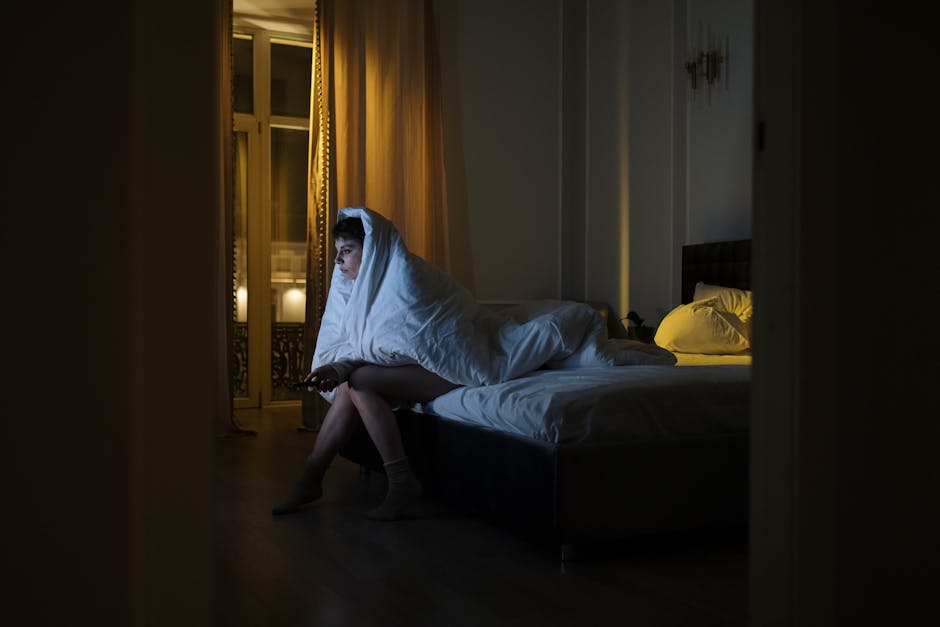
I Hadn’t Slept More Than 4 Hours in Three Years — Until I Finally Found What Was Missing
It was 3:47 AM on a Tuesday when I sat on the edge of my bed, staring at the wall, and quietly started crying. Not from sadness, exactly. From exhaustion so deep it had become its own kind of grief. I had forgotten what it felt like to wake up rested. I had forgotten what it felt like to be myself.
If you’re reading this at an hour when the rest of your house is silent, when the darkness feels somehow louder than the daytime, then you already know what I mean. You don’t need me to explain what chronic insomnia does to a person. You’re living it right now.
The Hidden Epidemic That Nobody Talks About Honestly
Here’s what the statistics look like on paper: according to the American Sleep Association, over 70 million Americans suffer from chronic sleep disorders. Adults between 35 and 55 are disproportionately affected — caught in the brutal squeeze between career pressure, aging parents, growing kids, hormonal shifts, and a nervous system that simply refuses to shut down at night.
But statistics don’t capture the real cost. The real cost is:
- Snapping at your kids over something small and hating yourself for it
- Sitting in an important meeting and not being able to form a complete thought
- Watching your partner fall asleep in minutes while you lie there, heart racing, mind spinning
- Canceling plans with friends because you’re too exhausted to pretend you’re okay
- Feeling like you’re slowly disappearing from your own life
That was my reality for nearly three years. I tried everything. I cut caffeine by noon. I bought blackout curtains. I downloaded every meditation app available. I did the sleep hygiene checklist so many times I could recite it in my sleep — which was ironic, because I couldn’t actually sleep.
What My Body Was Actually Trying to Tell Me
It wasn’t until I spoke with a functional medicine practitioner that I understood something crucial: my body wasn’t broken. It was depleted.
By our mid-30s and beyond, several biological shifts begin working against restful sleep. Melatonin production — the hormone that signals your brain it’s time to rest — decreases by up to 70% as we age. Magnesium levels, which regulate the nervous system and muscle relaxation, become chronically low due to stress and modern diets. Cortisol, the stress hormone, dysregulates and spikes at night instead of tapering down the way it’s supposed to.
This isn’t weakness. This is biology. And once I understood that, I stopped blaming myself and started looking for real solutions.
The Science Behind Sleep Support Supplements
Not all supplements are created equal, and after years of trial and error, I learned to look for specific, research-backed ingredients. Here’s what the science actually supports:
- Melatonin (low-dose, 0.5–3mg): Clinical research published in the journal Sleep Medicine Reviews confirms that low-dose melatonin effectively reduces sleep onset time without causing dependency or grogginess.
- Magnesium Glycinate: A 2012 study in the Journal of Research in Medical Sciences found that magnesium supplementation significantly improved sleep quality, sleep efficiency, and early morning awakening in adults over 50.
- L-Theanine: An amino acid found in green tea, shown in multiple studies to promote relaxation without sedation — helping quiet that relentless mental chatter.
- Ashwagandha: An adaptogenic herb clinically proven to lower cortisol levels and improve sleep quality in people experiencing chronic stress.
- GABA: A naturally occurring neurotransmitter that calms nervous system activity, helping your brain transition from alert to restful.
The Night Everything Changed
About four months ago, I started a high-quality sleep supplement that combined all of these ingredients in clinically studied ratios. I’ll be honest — I was skeptical. I had been disappointed so many times before.
But the first night, something was different. My body felt like it was exhaling for the first time in years. I didn’t just fall asleep — I stayed asleep. I woke up at 6:30 AM before my alarm, and instead of dreading the day, I actually felt ready for it.
Within three weeks, I wasn’t the same person. I had patience again. I had energy in the afternoon. I laughed easily. My brain worked the way I remembered it working. My husband noticed. My kids noticed. I noticed.
What to Look for in a Quality Sleep Supplement
- Third-party tested for purity and potency
- Non-habit forming formula with no prescription ingredients
- Transparent labeling with no proprietary blends
- Made in an FDA-registered, GMP-certified facility
- Positive verified reviews from real users in your age group
You Deserve to Sleep. You Deserve to Feel Like Yourself Again.
If you’ve been running on empty, white-knuckling your way through days that blur into weeks, please hear this: you don’t have to keep suffering. Your exhaustion is real, your struggle is valid, and there are evidence-based tools that can genuinely help.
Sleep isn’t a luxury. It is the foundation of everything — your health, your relationships, your joy, your ability to show up for the people who need you most.
I spent three years losing pieces of myself in the dark. I don’t want that for you. Take the first step toward real, restorative sleep tonight.
You’ve been exhausted long enough. Tonight can be different.
PINTEREST_IMAGE: exhausted woman discovering peaceful deep sleep
PINTEREST_TEXT: Finally Sleep All Night Long